In our kitchen, we have stainless steel appliances, like many others these days, and while beautiful, they have a downside, magnets don’t stick to them. So with our family travels, we like to buy small magnets as mementos to remember the trips by, but we don’t have anywhere visible to stick them. So I set out to create a magnet board that fit a counter space we have in our kitchen that looks like with the rustic wood frame look that is so in these days.
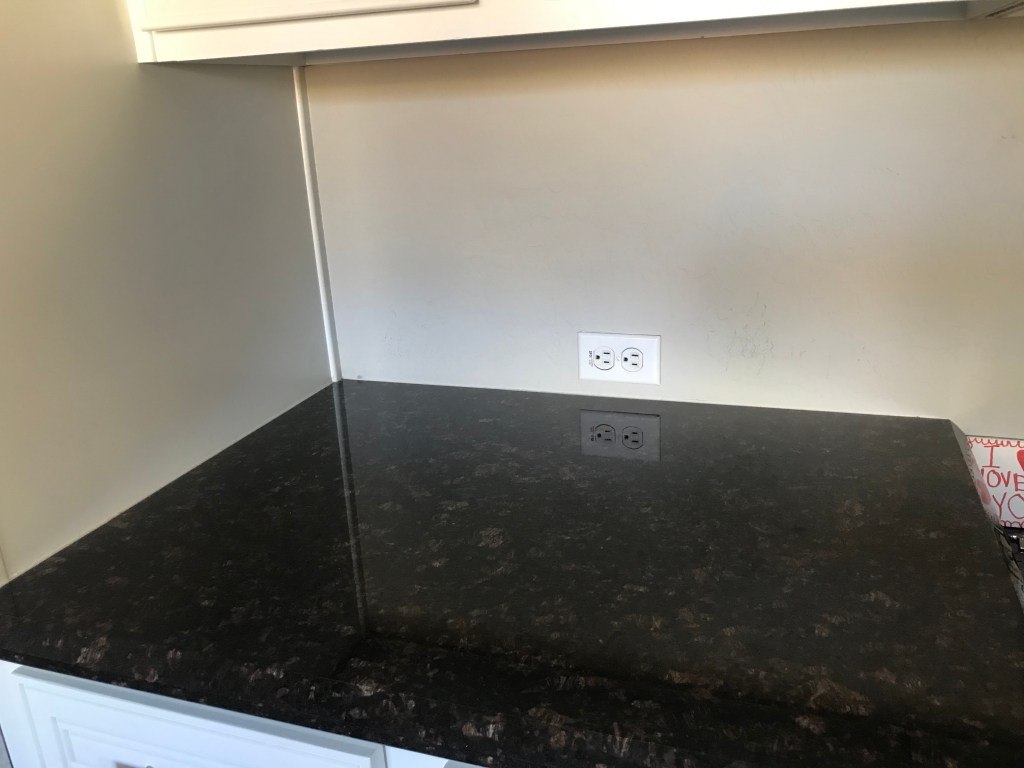
The first step on this project was to get the measurements of where it will hang against the wall. So I got the width and height and then headed to the garage to cut the wood, and the steel sheet to size. I got the steel sheet from the duct area at Home Depot (24″ x 36″ sheet) and then bought a 1″ x 2″ x 8′ board to cut up for the frame.
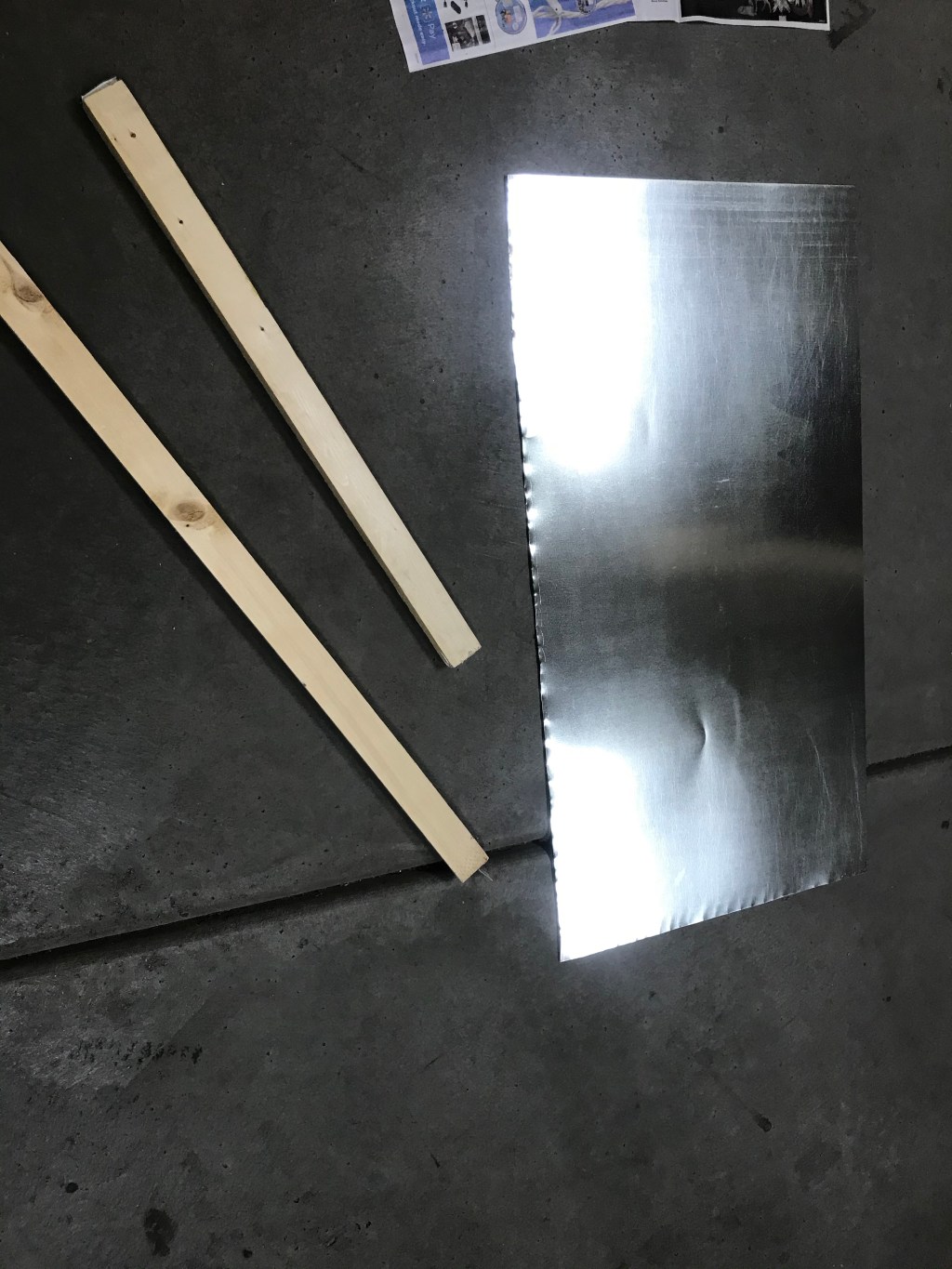
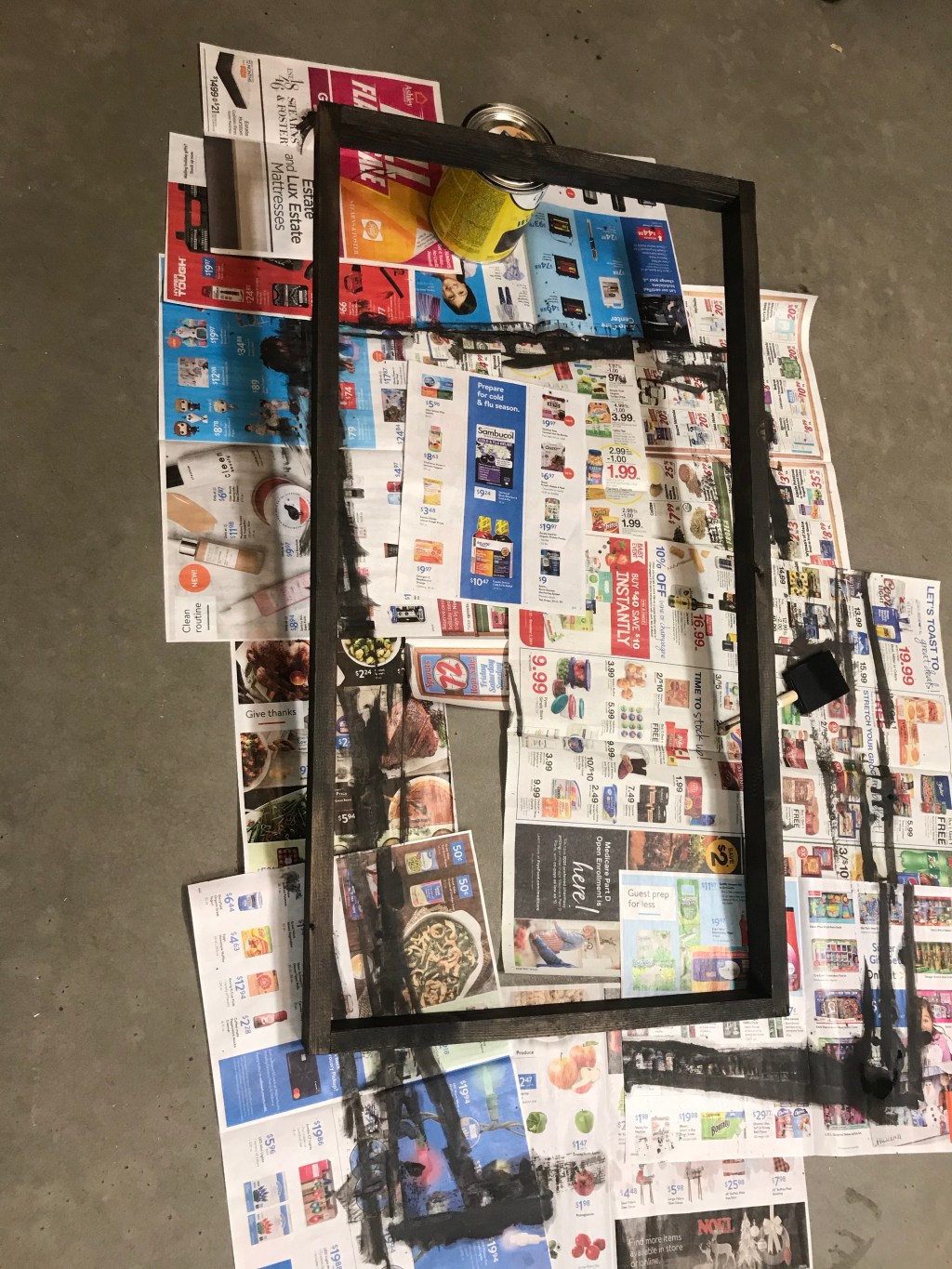
After cutting everything to size, I then nailed the end boards into the long boards using 2 small nails in each joint. It doesn’t have to be super secure, because the steel sheet with add further rigidity to the structure when it is fully assembled. I then added a nice dark stain to the wood, and let it dry overnight. I just applied the stain with a simple foam brush.

After the stain was dry, I then taped the steel sheet to the back for positioning and then took the whole board into the house for final positioning check. Because in my location I need to work around an outlet, it got a lot more complicated. With no outlet, this project would be done right here. I then attached the steel to the wood frame using a staple gun with a staple every 4″ or so. The result was a super solid feeling board.
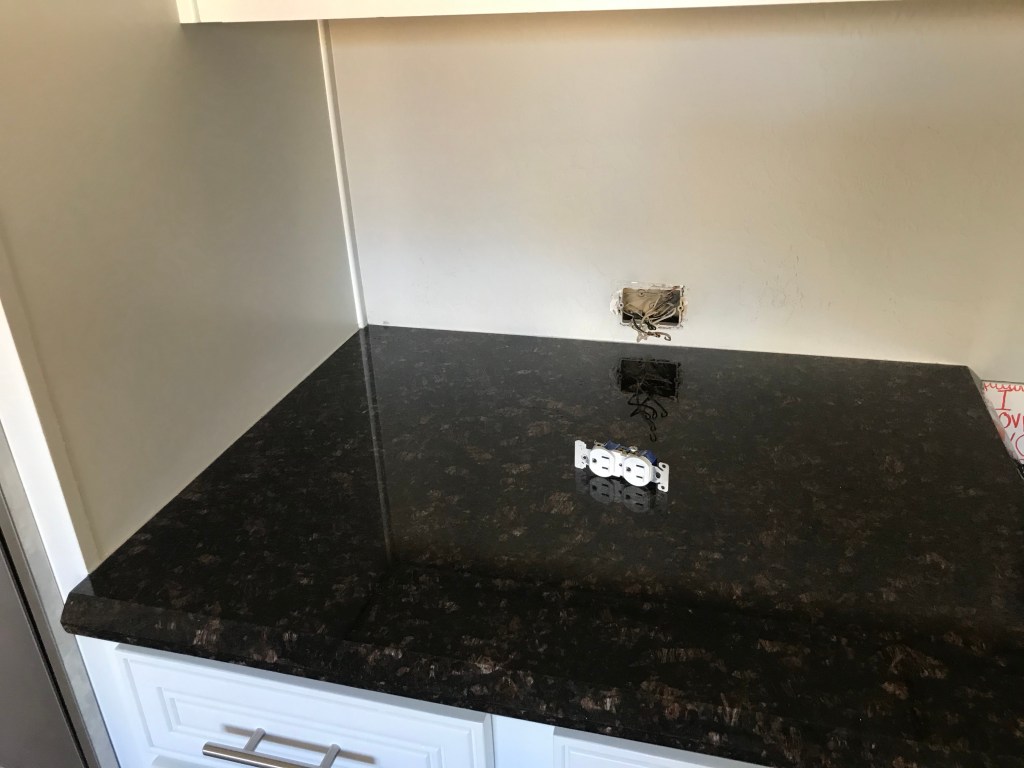
Moving on, I removed the outlet and the wires from the outlet, got my final measurements for the outlet location, and transferred those marks to the steel with a sharpie. I then used a mix of tin snips and a hammer and chisel to cut out the hole that would fit around the outlet box. I just flattened out the rough edges using the hammer directly on the steel against the concrete floor, but since the outlet cover will hide the rough edges, I was good at that point.
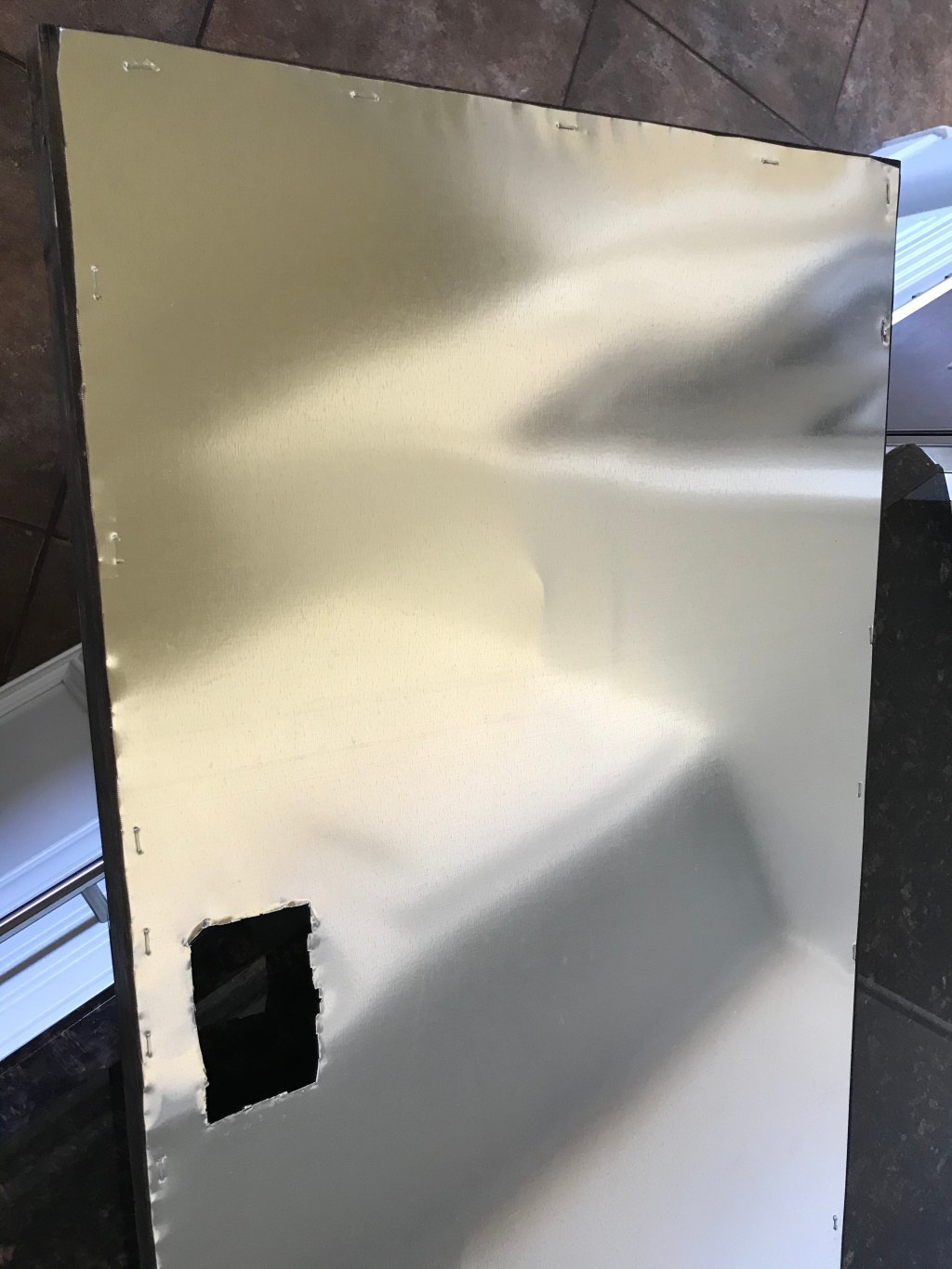
I then took the whole board, and added a 3-M velcro wall attachment to the top edge of the frame and then to the wall, and pushed those hard together to help hold the frame in place against the wall. My other attachment was the outlet cover itself to help hold the bottom against the wall and in place.

Because we are dealing with electricity and a steel sheet wrapped around an outlet, I decided to use an outlet extender box that lines the inside of the hole, basically keeping the outlet isolated from whatever I lined the hole with. It was a bit of a tight fit, and I had to cut off some of the bottom and sides of the outlet extender so it fit in the box, but it all worked out in the end. I was then able to get the outlet reattached to the wires and screw it all down tight.
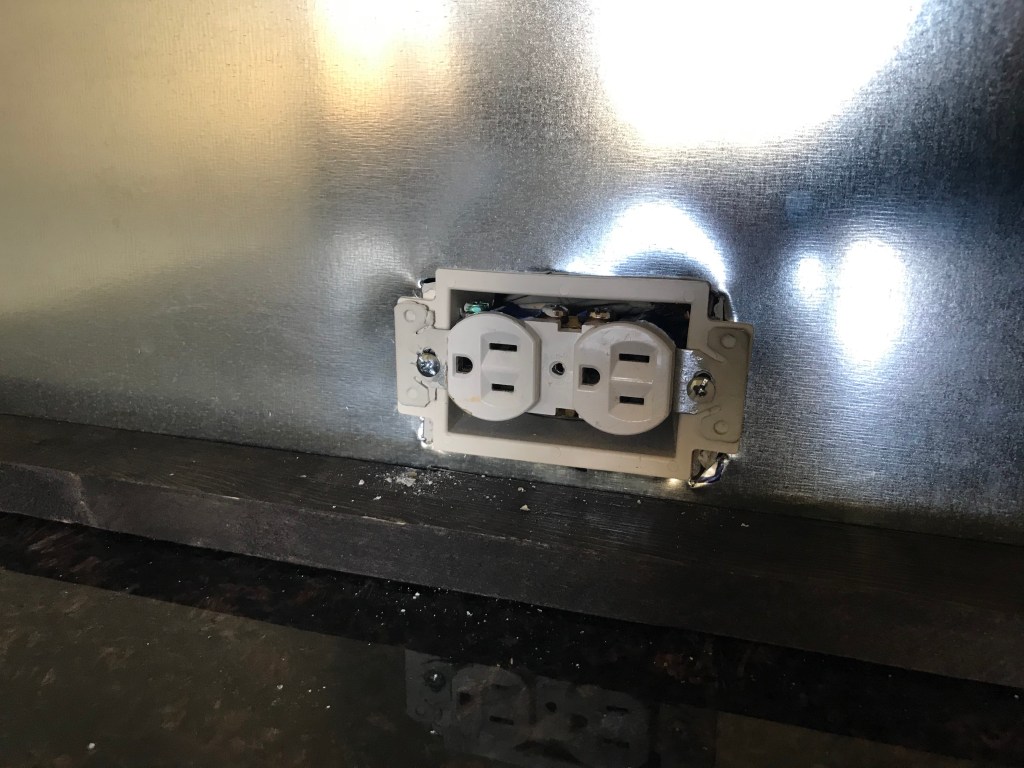
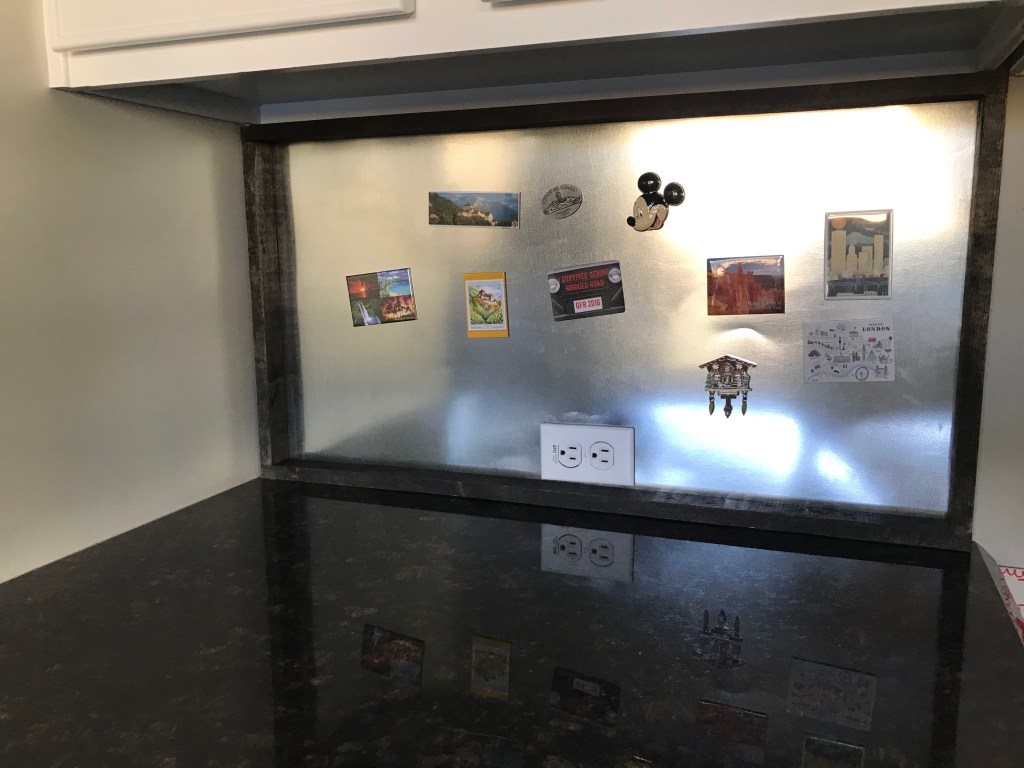
With the outlet secured, it was time to put the final outlet cover back in place. With that screwed in you can now see the final result, a magnet board built to fit in the space allotted and even has a built-in look with the outlet going through the steel. My kids were impressed by that one when they first saw it.
 Pysan
Pysan 